According to Gartner, 99% of cloud security failures through 2026 will be the customer's fault — not the provider's — primarily due to misconfiguration. Meanwhile, the average data breach now costs $4.88 million globally, with financial-sector incidents averaging $6.08 million.
Choosing the right cloud management service isn't an IT checkbox. For regulated businesses, it's a liability decision. This guide covers the top cloud management services with built-in security compliance for 2026, plus what to actually evaluate before you commit.
Key Takeaways
- Cloud management services with compliance support keep your environment audit-ready across AWS, Azure, and multi-cloud setups
- Leading 2026 platforms include Azure Defender for Cloud, CrowdStrike Falcon, Palo Alto Prisma Cloud, Cisco XDR, and Zscaler Zero Trust Exchange
- Look for coverage across HIPAA, PCI-DSS, GDPR, NIST, SOC 2, and ISO 27001
- Shortlist providers based on certifications, monitoring depth, and how well they integrate with your current stack
- Pairing these platforms with a certified local MSP handles the configuration, audits, and ongoing monitoring that keep compliance from slipping
What Are Cloud Management Services with Security Compliance?
Cloud management services handle the ongoing oversight of cloud infrastructure — provisioning, performance monitoring, cost control, and availability. Security compliance adds a regulatory layer on top: ensuring data protection standards are continuously enforced across access controls, audit trails, and policy enforcement.
The demand is growing fast. The global cloud managed services market was valued at $155.73 billion in 2025 and is projected to hit $482.93 billion by 2034, driven heavily by compliance pressure in healthcare, finance, and legal sectors.
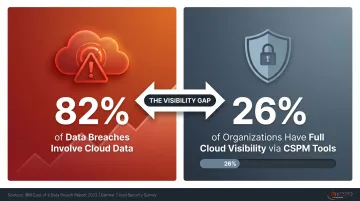
The scale of that growth is partly explained by how exposed organizations remain. Research from Exabeam shows 82% of data breaches involve cloud-stored data, yet only 26% of organizations use cloud security posture management (CSPM) tools. Most organizations are running cloud infrastructure they cannot fully see, monitor, or defend under regulatory scrutiny.
The services below were selected based on their ability to combine active cloud operations management with verifiable, purpose-built compliance support across multiple regulatory frameworks.
Best Cloud Management Services with Security Compliance in 2026
Providers were evaluated on compliance framework coverage, threat detection quality, industry certifications, multi-cloud support, and fit for regulated businesses of varying sizes. Five platforms stand out in 2026 — each profiled below with key features, supported frameworks, and ideal use cases.
Microsoft Azure Managed Services (with Microsoft Defender for Cloud)
For organizations already running Microsoft 365 or Azure Active Directory, Microsoft's managed cloud offering is a natural fit. Microsoft Defender for Cloud integrates natively, providing continuous compliance assessment without requiring separate tooling.
Key differentiators:
- Automated compliance assessments against major regulatory frameworks
- Secure Score dashboard showing your posture across Azure, AWS, and GCP
- Continuous misconfiguration detection via Azure Policy
- Deep integration with Microsoft Sentinel for SIEM and threat correlation
| Category | Details |
|---|---|
| Compliance Frameworks | HIPAA/HITRUST, PCI-DSS, ISO 27001, NIST SP 800-53, SOC 2, GDPR, CIS Benchmarks |
| Key Security Features | Microsoft Defender for Cloud, Secure Score, Azure Policy, continuous compliance monitoring, threat intelligence |
| Best For | Organizations using Microsoft 365, Azure-based infrastructure, healthcare, legal, and financial sectors |
Microsoft was named a Leader in The Forrester Wave: Security Analytics Platforms, 2025, and recognized as a Representative Vendor in Gartner's CNAPP Market Guide.
Cisco Umbrella / Cisco XDR (Cisco Secure Cloud Management)
Cisco's cloud security suite centers on Umbrella for DNS-layer protection and Cisco XDR (which replaced SecureX in 2023) for cross-platform threat correlation. Together, they provide unified visibility across on-premises, remote, and cloud environments.
Key differentiators:
- DNS-layer security blocks threats before connections are established
- Integrated CASB secures cloud app access and data
- Zero-trust network access for hybrid and remote workers
- Strong fit for businesses already running Cisco network infrastructure
| Category | Details |
|---|---|
| Compliance Frameworks | HIPAA, PCI-DSS, NIST, ISO 27001, GDPR, SOC certifications |
| Key Security Features | DNS-layer security, CASB, secure web gateway, zero-trust network access, unified threat visibility via Cisco XDR |
| Best For | Mid-size to enterprise businesses with existing Cisco infrastructure, hybrid work environments, regulated industries |
Cisco holds Leader status in the 2024 Gartner Magic Quadrant for SD-WAN and was recognized as a Leader in The Forrester Wave: Enterprise Firewall Solutions, Q4 2024.
CrowdStrike Falcon Cloud Security
CrowdStrike Falcon Cloud Security is an AI-powered cloud-native application protection platform (CNAPP) that covers the full spectrum: cloud workload protection, cloud security posture management (CSPM), identity entitlement management (CIEM), and managed detection and response across AWS, Azure, and Google Cloud.
Key differentiators:
- Behavioral AI detects threats in real time without signature reliance
- 24/7 managed threat hunting by CrowdStrike's elite team
- Agentless scanning for rapid deployment
- Industry-leading breach prevention track record — 100% detection and 100% protection in the 2025 MITRE ATT&CK Evaluations
A Forrester Total Economic Impact study (April 2026) found organizations achieved 264% ROI over three years with payback in under six months.
| Category | Details |
|---|---|
| Compliance Frameworks | HIPAA, PCI-DSS, SOC 2, NIST, GDPR, ISO 27001, CIS Benchmarks, MITRE ATT&CK |
| Key Security Features | CNAPP, CSPM, CWPP, CIEM, 24/7 managed threat hunting, behavioral AI, agentless scanning, IaC scanning |
| Best For | Businesses needing advanced managed detection, healthcare and finance sectors, multi-cloud deployments |
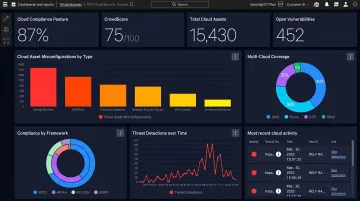
CrowdStrike has been named a Gartner Magic Quadrant Leader in Endpoint Protection Platforms for six consecutive years.
Palo Alto Networks Prisma Cloud
Prisma Cloud covers the full development-to-production lifecycle more completely than most CNAPPs on the market. Security embeds from the moment infrastructure-as-code is written all the way through runtime — giving security and DevOps teams a unified view across multi-cloud environments.
Key differentiators:
- IaC scanning catches misconfigurations before deployment (supports Terraform, Kubernetes, CloudFormation, and more)
- Attack path analysis shows how threat actors could move laterally
- CIEM manages identity permissions across cloud environments
- Code-to-cloud model supports DevSecOps practices natively
Palo Alto Networks reports Prisma Cloud delivers 90% reduction in compliance documentation time and 64% lower total audit time for healthcare organizations — a substantial time savings for teams managing four or more compliance audits per year.
| Category | Details |
|---|---|
| Compliance Frameworks | HIPAA, HITRUST, GDPR, PCI-DSS, SOC 2, ISO 27001, NIST, CIS Benchmarks |
| Key Security Features | CSPM, CWPP, CIEM, IaC scanning, Kubernetes security, attack path analysis, vulnerability prioritization |
| Best For | Enterprises with complex multi-cloud or hybrid architectures, DevSecOps teams, highly regulated industries |
Palo Alto Networks has been named a Leader in the Gartner Magic Quadrant for Cloud-Native Application Protection Platforms (CNAPP) and holds consistently high placement in Forrester's cloud security evaluations.
Zscaler Zero Trust Exchange
Zscaler replaces the traditional network perimeter with identity-verified, policy-driven access — enforced consistently whether users are in the office, remote, or spread across multiple time zones. This architecture eliminates the implicit trust assumptions that VPNs rely on, making it well-suited for businesses where the workforce is the perimeter.
Key differentiators:
- Zero Trust Network Access (ZTNA) eliminates VPN dependency
- Full SSL inspection at scale
- Data loss prevention (DLP) and CASB included in platform
- Compliance policies apply uniformly across all users and locations
That shift is accelerating: the zero trust market is estimated at $38.37 billion in 2025, with 67% of organizations now implementing zero trust strategies. Zscaler's early lead in this space translates into a more mature, battle-tested platform than most competitors.
| Category | Details |
|---|---|
| Compliance Frameworks | HIPAA, HITRUST, PCI-DSS, GDPR, NIST 800-53, SOC 2, ISO 27001, FedRAMP High, and 15+ additional certifications |
| Key Security Features | ZTNA, CASB, DLP, SSL inspection, cloud firewall, secure web gateway |
| Best For | Distributed or remote workforces, organizations moving away from VPNs, mid-to-large businesses in finance and healthcare |
Zscaler has held Gartner Magic Quadrant Leader status in Security Service Edge for three consecutive years since the report's inception.
How We Chose These Providers
The selection process focused on providers that combine active cloud environment management with documented, enforceable compliance — not just reactive alerting dashboards. One common mistake: businesses choose a platform based on brand recognition without verifying compliance coverage for their specific regulatory requirements. Not every cloud tool is HIPAA-ready, even if it carries impressive security credentials.
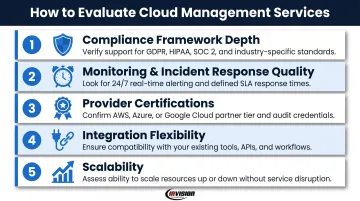
Evaluation criteria:
- Compliance framework depth — Coverage across HIPAA, PCI-DSS, GDPR, NIST, SOC 2, and ISO 27001
- Monitoring and incident response quality — 24/7 detection, not just scheduled scans
- Provider certifications — Third-party audit results and analyst recognition (Gartner, Forrester, IDC)
- Integration flexibility — Ability to work with existing infrastructure rather than requiring full replacement
- Scalability — Suitability for small to mid-size businesses, not just enterprise deployments
The financial stakes justify careful evaluation. HIPAA civil penalties range from $145 to $2,190,294 per violation. PCI-DSS non-compliance can result in fines up to $500,000 per incident. The cost of implementing the right platform is a fraction of what a single breach costs.
For Phoenix Metro businesses in healthcare, legal, accounting, or manufacturing, working with a certified local IT managed service partner matters. InVision Technology Solutions — a Microsoft Silver Technology Partner and Select Certified Cisco Partner serving the Phoenix Metro area since 2006 — handles the configuration, monitoring, and ongoing maintenance that turns a compliance-capable tool into actual compliance. Having the right platform means little if it isn't set up and managed against your specific regulatory obligations.
Conclusion
The strongest cloud management providers in 2026 treat security and compliance as a single function — delivering continuous visibility, automated enforcement, and audit-ready reporting from one platform.
When evaluating options, go beyond feature lists. Ask whether the service covers your specific regulatory frameworks, whether it integrates with your current infrastructure, and whether your team has the capacity to act on what it surfaces. Compliance tooling only works when someone is accountable for acting on what it surfaces.
If that accountability gap is a concern, working with a local managed services partner can close it. InVision Technology Solutions has served Phoenix Metro businesses since 2006, bringing Microsoft and Cisco certifications and a two-dedicated-engineers-per-client model to cloud implementation and compliance management. Contact them at (480) 699-8077 or info@invisionaz.com to discuss how a managed cloud approach fits your operations.
Frequently Asked Questions
Which cloud service is best for security?
There's no single answer — the right platform depends on your infrastructure, industry, and compliance obligations. That said, Microsoft Defender for Cloud, CrowdStrike Falcon, and Palo Alto Prisma Cloud consistently rank among the top options in 2026 based on detection capability and compliance framework coverage.
What compliance frameworks do cloud management services typically support?
Most enterprise-grade platforms support HIPAA, PCI-DSS, GDPR, NIST CSF, SOC 2, and ISO 27001. Businesses in healthcare, finance, or legal should verify specific framework coverage with the provider before committing — not all tools treat each framework with equal depth.
What is the difference between cloud security and cloud management services?
Cloud security focuses on protecting data and infrastructure from threats. Cloud management services encompass broader operational oversight — performance, cost optimization, and availability. The best providers in 2026 combine both into a unified offering rather than treating them separately.
How do managed cloud services help with HIPAA compliance?
They help by enforcing access controls, encrypting data at rest and in transit, providing audit-ready logs, and continuously monitoring for misconfigurations or unauthorized access that could constitute a violation. Automated compliance dashboards flag drift as soon as it occurs.
What should small businesses look for in a cloud management service with compliance?
Prioritize 24/7 monitoring, industry-specific compliance templates, transparent pricing, dedicated support, and clear documentation practices. Partnering with a certified local MSP can simplify both initial implementation and ongoing compliance management from day one.
How often should cloud security compliance be reviewed?
Automated tools should monitor continuously. Formal internal reviews should happen quarterly, with full audits aligned to your regulatory timelines.